Start with the Heavenly Stem of the Day Pillar – your Day Master, which stands for you. Count the Five Elements and check the birth month to judge whether the Day Master is strong or weak. Use the Ten Gods to describe how the other seven characters relate to you, then read the ten-year Luck Pillars.
The layout: four pillars, eight characters
A BaZi chart has four pillars – year, month, day and hour. Each pillar has a Heavenly Stem on top and an Earthly Branch below, eight characters in all (bazi literally means ‘eight characters’). Two details trip up beginners. The year changes at Lichun, the start of spring around February 4, not on January 1 or Lunar New Year. The month changes at the solar terms, not on the first day of the lunar month. The hour pillar covers a two-hour block.
We will use a real chart throughout: a woman born on May 20, 1990 at 14:30. The Hall of Fate casts her pillars as Geng Wu (year), Xin Si (month), Yi You (day) and Gui Wei (hour).
Step 1: Find the Day Master
The Stem of the Day Pillar is the Day Master, and the whole chart is read from its point of view. The ten Stems pair up by element, yang first and yin second: Jia and Yi are Wood, Bing and Ding Fire, Wu and Ji Earth, Geng and Xin Metal, Ren and Gui Water.
Our example's Day Pillar is Yi You, so her Day Master is Yi, yin Wood. Classical texts picture Yi Wood as grass, flowers and vines: flexible, good at leaning on support and quick to adapt. That is only the starting point. The next three steps show how those traits play out in this particular chart.
Step 2: Count the elements, then check the season
Count the element of each of the eight characters. Here: Geng Metal, Wu Fire, Xin Metal, Si Fire, Yi Wood, You Metal, Gui Water, Wei Earth – Wood 1, Fire 2, Earth 1, Metal 3, Water 1. The element bars in the Hall of Fate's result panel are counted the same way: one per Stem and one per Branch, by each character's own element.
The count alone is not enough. The month Branch carries the most weight because it sets the season. She was born in a Si month, early summer, when Fire rules and Wood spends its energy feeding that Fire. Metal, which cuts Wood, appears three times. Her support comes from Gui Water in the hour (Water feeds Wood) and a Yi Wood hidden inside the Wei Branch. On balance this Day Master is on the weak side. Schools score strength differently. The method is the same, though: season first, then roots (the same element hidden in the Branches), then weigh what supports you against what drains or controls you.
Step 3: Name the relationships with the Ten Gods
The Ten Gods are labels for how each character relates to the Day Master. There are five relationships: what produces you is Resource, what you produce is Output, what controls you is Officer, what you control is Wealth, and your own element is Companion. Each splits by polarity. Same polarity as the Day Master gives Indirect Resource, Eating God, Seven Killings, Indirect Wealth and Friend. Opposite polarity gives Direct Resource, Hurting Officer, Direct Officer, Direct Wealth and Rob Wealth.
Applied to the example: Geng Metal controls Yi Wood with opposite polarity, so the year Stem is Direct Officer. Xin in the month is Seven Killings. Gui Water produces Wood with the same polarity, so the hour Stem is Indirect Resource. For the Branches, use the main hidden Stem: Ding in Wu is Eating God, Bing in Si is Hurting Officer, Xin in You is Seven Killings, Ji in Wei is Indirect Wealth.
Read together: a lot of Officer energy means rules, duty and outside pressure take up much of her life. Resource in the hour helps turn that pressure into study and reflection. Output in two Branches gives her expression and creativity an outlet. The Ten Gods describe tendencies, not good or bad luck.
Step 4: Follow the Luck Pillars
Luck Pillars run from the month pillar and change every ten years. Direction depends on sex and the polarity of the birth year. Men born in a yang year and women born in a yin year count forward. The other two cases count backward. 1990 is a Geng year, which is yang, and she is a woman, so hers run backward: Geng Chen from age 6, Ji Mao from 16, Wu Yin from 26, Ding Chou from 36 (starting 2025), then Bing Zi and Yi Hai.
For each pillar, ask whether it feeds or drains the Day Master. Ji Mao and Wu Yin sit on Mao and Yin, both Wood Branches, which give a weak Yi Wood roots. Those twenty years are traditionally read as a steadier stretch. Ding Chou brings Ding Fire, an Eating God, so the focus shifts to output and self-expression. A man born the same minute would count forward from Ren Wu – a completely different sequence. Always enter your sex correctly.
Common mistakes
Counting elements and concluding you are ‘missing’ one. The eight-character count ignores hidden Stems and the season. Our example shows only one Wood, but Wei hides Yi Wood, so she is not truly missing it.
Taking the names literally. Seven Killings and Hurting Officer sound alarming, but they are just relationship labels. Strong Seven Killings is often described as drive and resilience.
Treating your Chinese zodiac animal as the whole story. The animal is only the year Branch, one character out of eight. The Day Master and the month matter far more.
Guessing the birth time. The hour pillar is two of the eight characters and also shifts when your Luck Pillars begin. If you don't know the time, tick the box instead of inventing one.
Cast your own chart in FateTown
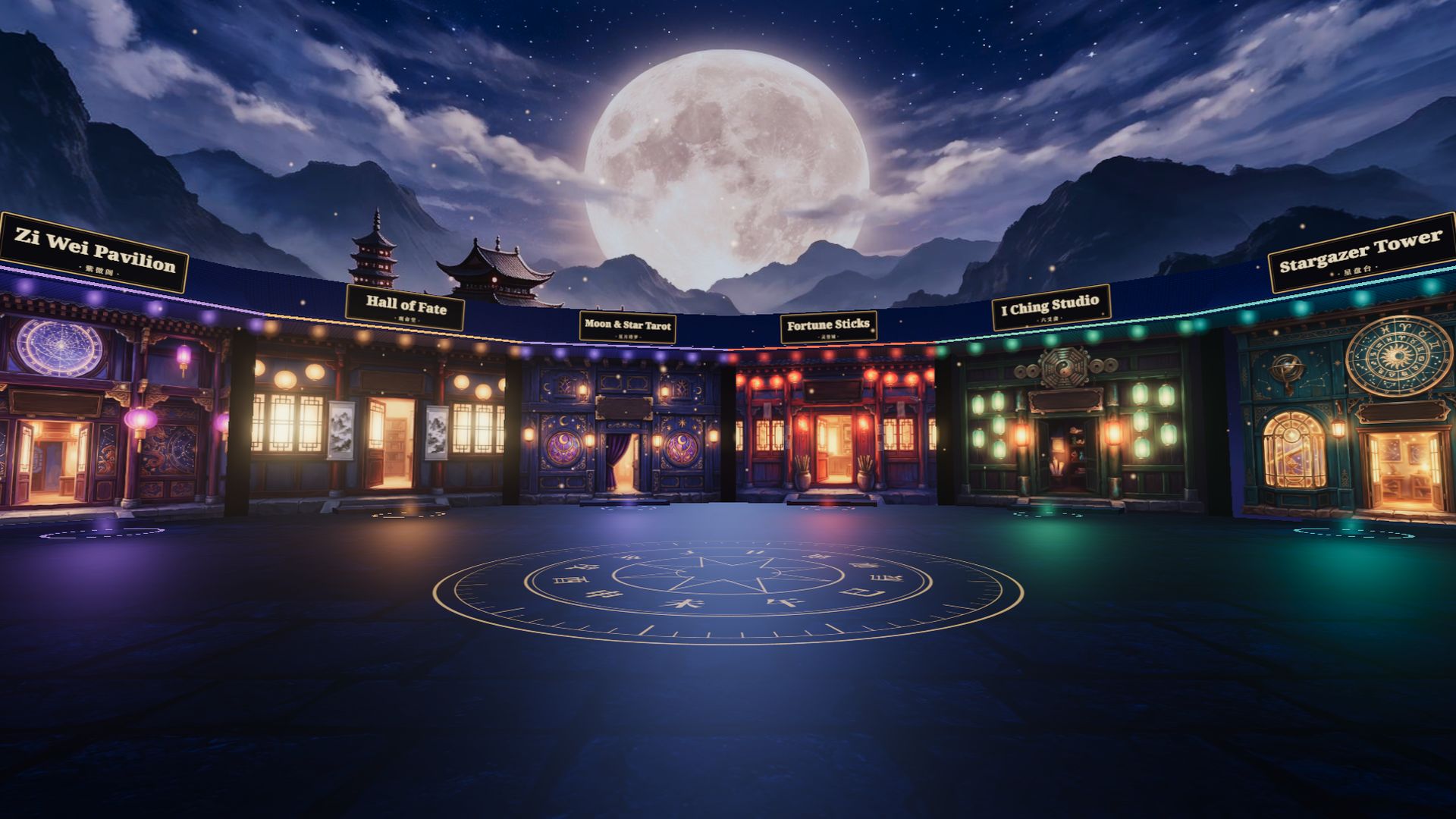
In the Hall of Fate, Master Lu asks for your Gregorian birth date, birth time and sex. BaZi doesn't need a birth city. Press Cast and the four pillars rise one by one in the 3D hall. The result panel shows your Day Master, each character colored by element, the element count and eight Luck Pillars. The Day Master links to its dictionary entry. Ten Gods are not listed separately, so work them out with the rules above.
The AI quick reading is free. The full reading and the four topic reports (career, love, wealth, year ahead) cost points, and you can ask follow-up questions. The AI only explains the chart. It never changes the pillars.
FAQ
Is a BaZi calculator accurate?
Casting the chart is calendar math: the same birth moment always gives the same four pillars, and FateTown recomputes them on the server to check. The interpretation applies traditional rules plus an AI explanation in plain language. It is for entertainment and self-reflection only.
I was born outside China. Which time do I enter?
Enter the local clock time where you were born. Don't convert it to Beijing time. The Hall of Fate does not apply true solar time or remove daylight saving time automatically. If your birthplace was on daylight saving time when you were born, subtract one hour before you enter it.
What is my Day Master?
It is the Heavenly Stem of your Day Pillar, one of the ten Stems from Jia to Gui. Cast your chart in the Hall of Fate and it appears at the top of the result, linked to a full description.
Why do men and women born on the same day get different Luck Pillars?
The direction is set by sex together with the polarity of the birth year. Reverse the direction and every ten-year pillar changes.
Further reading
More guides
This article was compiled by AI from FateTown’s own chart rules and data. For entertainment and self-reflection only. · Updated 2026-11-19